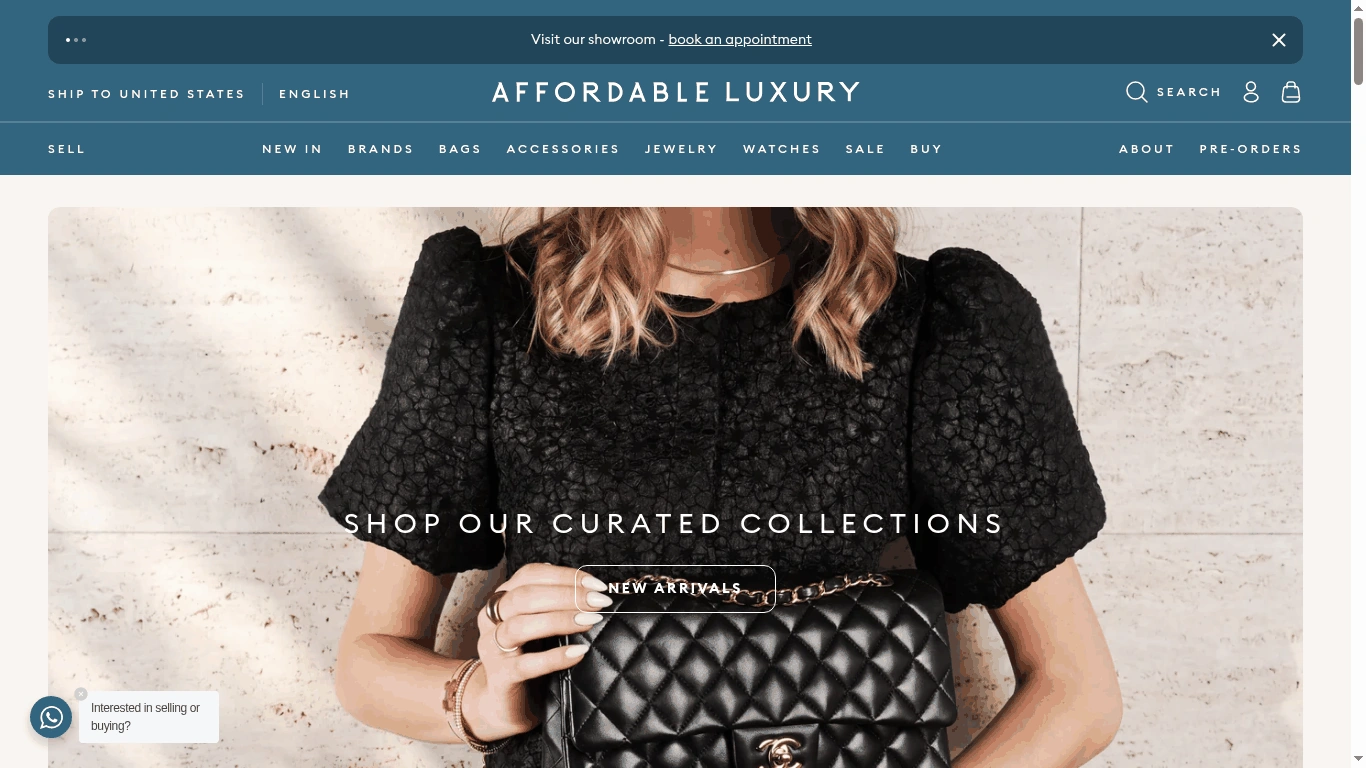
Affordable Luxury sells authenticated pre-owned designer bags, watches, jewellery and accessories. In a small team without separate specialists for development, e-commerce and content, I took hands-on responsibility for much of the day-to-day digital work, collaborating with the owner and involving external support when needed.
Small e-commerce changes are rarely isolated. A single request - showing sold-out items last, or adding a back-in-stock notification - can touch the theme code, an installed app, inventory settings and the emails customers receive, all at the same time. A large part of my work involved tracing where a behaviour came from before changing anything.
- Reading and troubleshooting a custom theme
I worked in a custom Shopify theme using Liquid, CSS and JavaScript - locating the section or snippet responsible for a behaviour, making a targeted change and testing it before it went live.
- Improving the storefront interface
Header and navigation structure, responsive layouts, product cards and how collections display and sort. Small interface details that made products easier to browse on phones as well as desktop.
- Investigating apps and workflows
Wishlist, back-in-stock, preorder, reviews, forms, sold-out sorting and inventory behaviour often overlapped between apps and theme settings. I mapped what each one was responsible for, tested alternatives and identified overlaps that could create conflicts.
- Writing the content around the products
Product descriptions, newsletters, campaign copy and blog posts in both English and Swedish, written so the item, its condition and the reason to trust the shop were clear.
- Researching and explaining the options
I read Shopify documentation and app docs, then presented the realistic options - what it cost, what it affected and what the trade-offs were - to a non-technical business owner who made the final call.
Editorial & digital content

The Most Iconic Louis Vuitton Bags – and How to Choose the Right One
Alongside my technical work, I wrote SEO-focused blog articles, product descriptions and campaign copy, and created newsletters using Klaviyo. This Louis Vuitton guide is one example of how I combined useful content with a commercial perspective.
Read the article ↗ (opens in a new tab)The experience strengthened my ability to troubleshoot independently: reading code I didn't write, narrowing down where a problem started and deciding whether to patch or rethink it. It also taught me to prioritise - some fixes mattered to customers immediately, while others could wait - and to explain technical choices in language a non-technical colleague could act on.
Further improvements could include search and filtering so large collections are easier to browse, making the responsibilities of the installed apps clearer so behaviours stop overlapping, and building more reliable routines for recurring work like new arrivals, campaigns and stock updates.